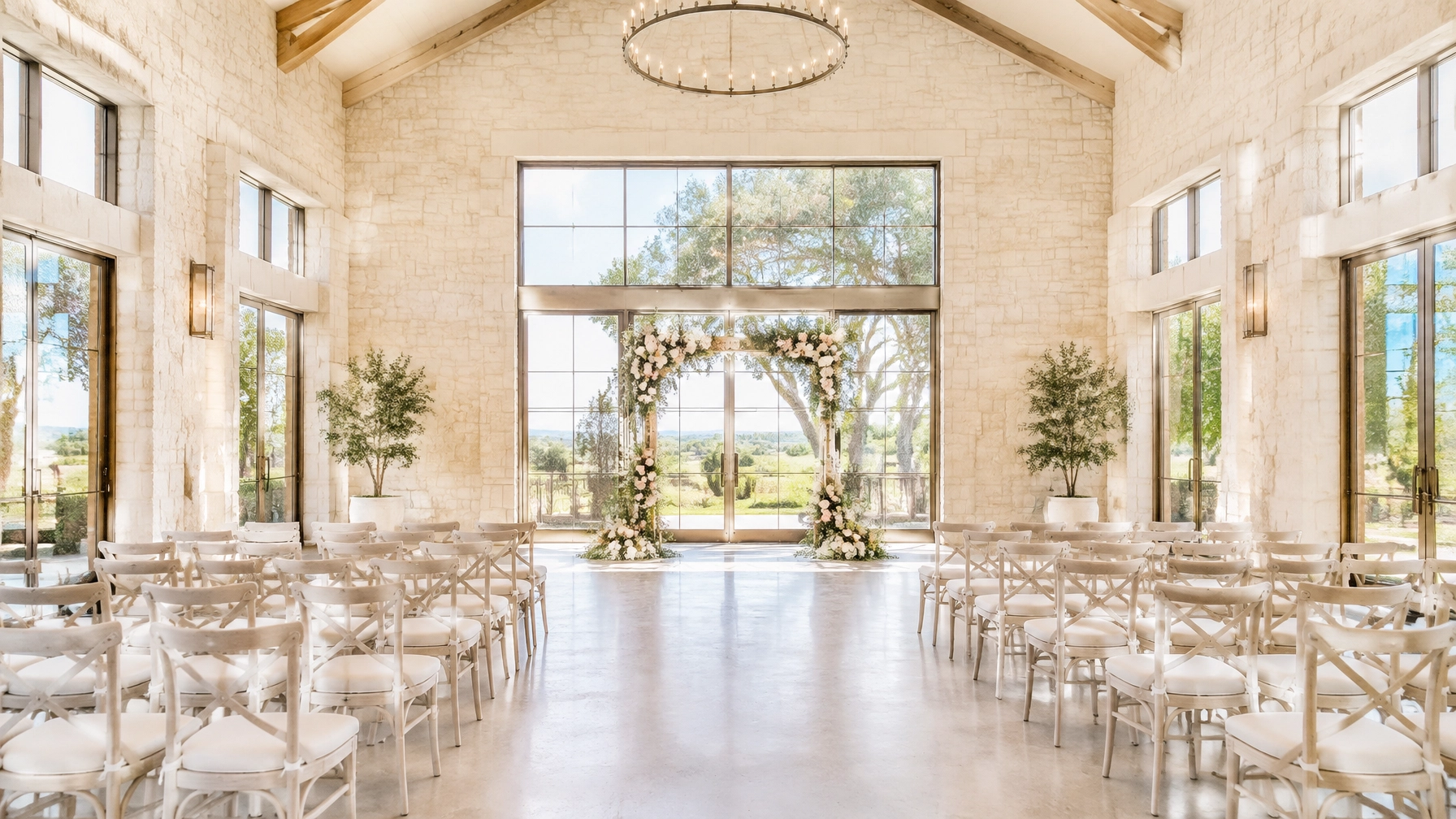
Title: Sunlit Texas Wedding Venue
Caption: Let couples picture the day before they book a visit.
Description: A bright, spacious wedding venue with a garden view, ceremony seating, and warm neutral details.
No. Virtual tours are not dead. They are still useful for wedding venues in 2026, but their role has changed. A 360° tour is not a magic booking button or a substitute for an in-person visit. It is a practical way to help couples understand your space, decide whether it fits, and feel ready to take the next step.
That matters in Texas, where couples may compare venues across Dallas–Fort Worth, Austin, Houston, San Antonio, and the Hill Country. Some are planning from another city or state. Others are fitting research between work, family, and a long list of wedding decisions. Give them a clear way to explore before they travel.
What a 360° Tour Does Best
A venue tour lets visitors look around at their own pace. They can explore the ceremony space, reception room, entry, and other areas that matter to their plans. They can get a better sense of how spaces connect and how a guest might move through the venue.
That transparency helps couples answer useful questions early. Can the ceremony and reception happen in separate spaces? Is there room for the layout they have in mind? What does the venue feel like beyond one carefully chosen photo?
A tour can also save your team time. Some couples will decide the space is not the right fit. That is okay. The couples who contact you may have a clearer idea of what to ask and a stronger reason to book a visit.
Still, weddings are personal. A digital walkthrough cannot recreate how a room feels in person, answer every question, or build a relationship with your team. Use the tour to support the conversation, not replace it.
360° Walkthroughs vs. Photo Galleries vs. Drone Footage
Each format has a job. The best choice depends on what couples need to see.
| Format | Best for | What it cannot show on its own |
|---|---|---|
| 360° walkthrough | Exploring room layout, transitions, and the overall feel of indoor spaces | The full energy of a live event or every fine detail in a room |
| Photo gallery | Showing polished details, table settings, flowers, and key moments | How rooms connect or what a view looks like from different angles |
| Drone footage | Showing the grounds, setting, outdoor ceremony areas, and nearby landscape | The inside experience or the fine details couples may want to inspect |
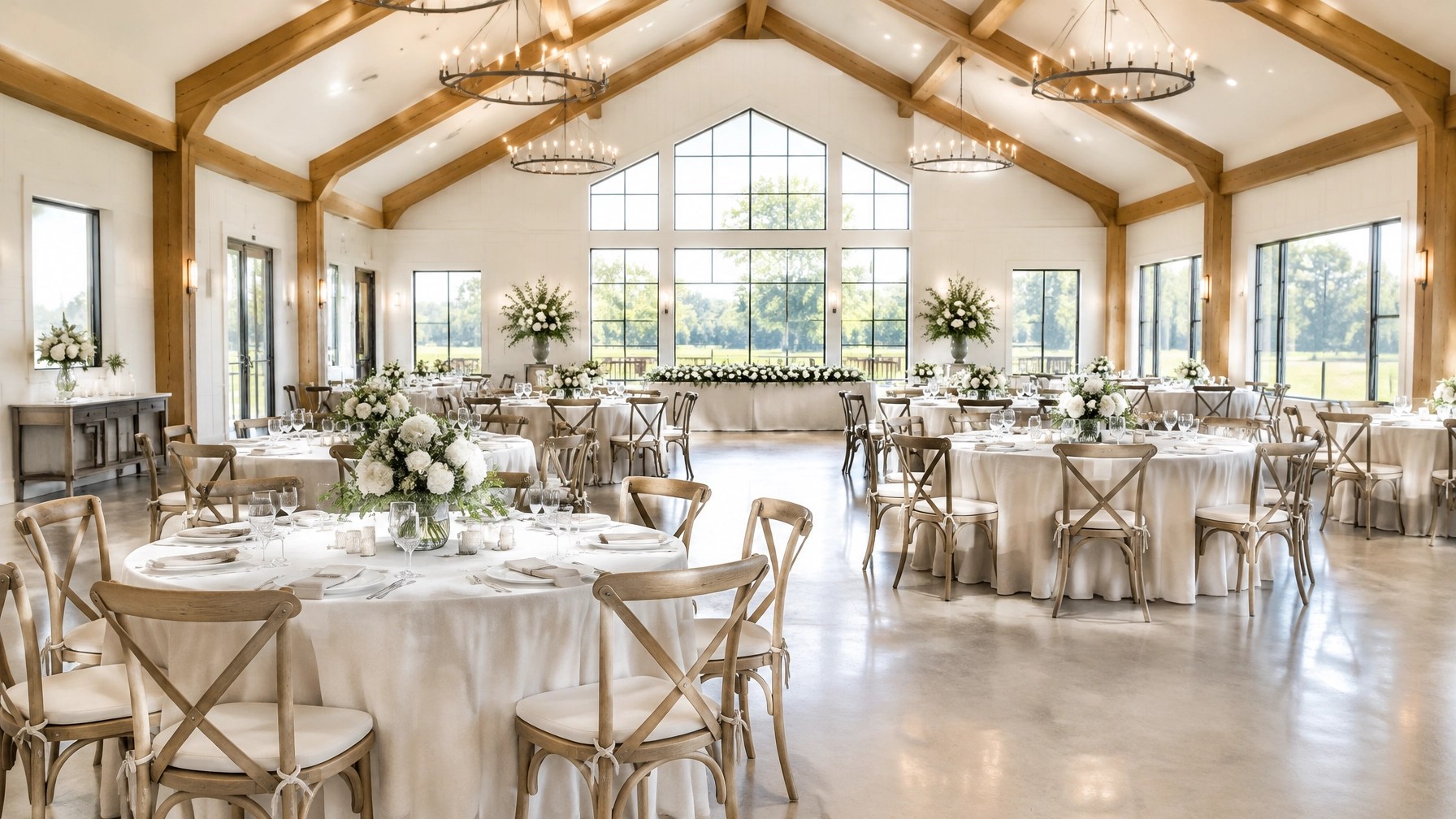
Title: Bright Wedding Reception Layout
Caption: Show the room’s layout as well as its style.
Description: An airy reception space with neutral linens, round tables, warm wood details, and natural light.
Whichever you choose, show the venue honestly and make sure the images reflect how the space looks today. A beautiful gallery creates emotion. A 360° walkthrough offers a sense of place. Drone footage adds context. Together, they help couples picture both the details and the bigger setting.
AI Search and the Couple’s Verification Loop
Couples are starting to use AI assistants to help build a shortlist. They might ask for an outdoor wedding venue near Austin, a reception space in the Dallas area, or a venue with indoor and outdoor options. AI tools can help narrow the choices, but many couples still check the details themselves before reaching out.
That is the verification loop: a couple sees a recommendation, visits the venue’s website, checks reviews, and looks through social media. They want to confirm that the venue fits their needs and that its online presentation matches what other people say.
This is where GEO, or Generative Engine Optimization, comes in. GEO helps make your business and its details easier for AI search tools to find, understand, and cite. Strong, specific website content matters. So do accurate business details, useful page structure, and clear information about spaces, capacities, location, access, and event options.
Immersive media supports the visual side of that research. A tour, video, or professional photo gives couples more ways to verify what the venue looks and feels like. But a tour alone does not guarantee an AI recommendation. Make important facts available as readable text on your website, too. Reviews and consistent details across your website, social accounts, and trusted listings also help couples check that the information holds up.
For more on this approach, read our post on GEO and AI-powered marketing.
Show the Experience, Not Just the Room
Media works best when it helps a couple imagine their own day. A set of empty rooms may show the architecture but leave them guessing about the event. Styled photographs can show table settings and ceremony options. A short video can capture movement and atmosphere. A tour can connect the spaces.
Our 360° portfolio includes immersive-media examples such as Bass Performance Hall, Irving Convention Center, and Eisemann Center. These projects show how a well-made tour can present a large, complex space in a clear and engaging way. The same care with detail and navigation can help a wedding venue showcase its own character.
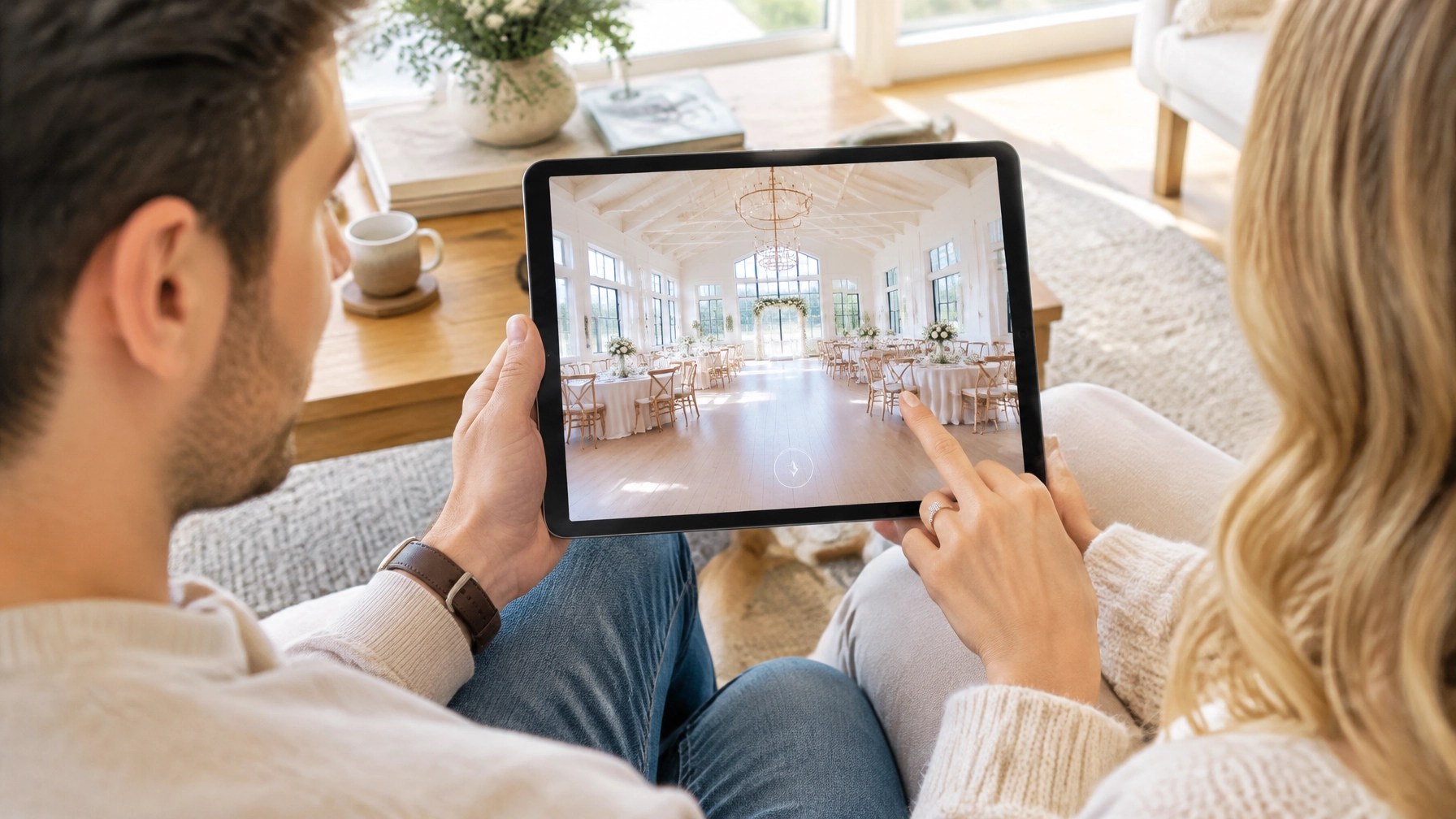
Title: Exploring a Venue Tour on a Tablet
Caption: Make the tour easy to open and explore on a phone or tablet.
Description: A couple uses a tablet to view a bright, neutral wedding venue in an interactive walkthrough.
Five Steps to Make Your Tour AI-Friendly and Booking-Ready
1. Put the Tour on the Right Page
Place the tour on your main wedding venue page or the page for the room it shows. Use a clear label, such as “Explore the reception space in 360°.” Do not make couples hunt through menus to find it.
2. Add Clear, Readable Venue Facts
Write the key details beside the tour. Include accurate room names, capacities, dimensions if available, ceremony and reception options, accessibility details, parking information, and your location. Do not rely on labels inside the tour to explain important facts.
3. Keep the Tour Current and Easy to Use
Check that it opens on phones and computers. Make sure the link works, the controls are easy to understand, and the experience loads smoothly. Update it when renovations or layout changes make the tour outdated.
4. Pair the Tour with Photos and Video
Use professional photos to showcase details couples may want to zoom in on. Add video when you want to show movement, event styling, or the feeling of a celebration. Use drone footage to show outdoor areas and the venue’s setting. Give every format a clear purpose.
5. Give Visitors a Simple Next Step
Place an inquiry button or tour-booking link near the media. Tell couples what to do next. You might invite them to check availability, ask a question, or schedule an in-person visit. Keep the process simple and easy.
Measure What Helps You Book
Do not judge a tour by views alone. Look at whether visitors use it, whether inquiries mention it, and whether the couples who explore it are a good fit for your venue. Ask new leads how they found you and what helped them decide to get in touch.
There is no need to promise a set number of bookings from a tour. Your results depend on your venue, your offer, your website, and how well your media supports the rest of your marketing. Track what happens, listen to couples, and fine-tune the experience based on what you learn.
Ready to Help Couples Picture Their Day?
Virtual tours are not dead. They are one part of a strong venue marketing mix: a useful way to explore a space, supported by great photography, video, clear website content, and an easy next step.
We create and process immersive media, then help you put it to work online. Contact Aimee’s Marketing to talk through a tour that fits your venue and your goals.
Comments: Disable comments on both the draft and published post.
A little marketing insight can make planning brighter. Sign up for our newsletter for helpful ideas, fresh tips, and no aisle-long list of fine print.
Simplified Summary
Virtual tours are still useful for wedding venues. They help couples explore a space before they visit. Photos show details, videos show the feel of an event, and drone footage shows the grounds. A 360° tour helps people see how rooms connect.
Couples may use AI to find venues, then check the venue’s website, reviews, and social media. Clear website facts, strong visuals, and an easy way to book a visit help couples feel sure about their choice. A tour works best when it is current, easy to use, and part of a complete marketing plan.